How to Calculate Calories for Weight Loss (Complete Guide)
Understanding how to calculate calories is the single most important skill for anyone who wants to lose weight, gain muscle, or simply maintain a healthy body. Every food you eat provides energy measured in calories, and every action you take burns calories. When you know your daily calorie needs, you can make informed decisions about what to eat, when to eat, and how much to eat. In this complete guide, you'll learn how to calculate your BMR, TDEE, and personalized calorie target using proven formulas and real-world examples. We'll also cover how to adjust your intake for weight loss, weight gain, or breastfeeding, and how to track your progress effectively.
1. What is a Calorie?
A calorie is a unit of energy. In nutrition, we actually use kilocalories (kcal), which are 1,000 small calories. When you see "calories" on a food label, it means kilocalories. Every macronutrient provides a different amount of energy per gram. Protein and carbohydrates each provide 4 calories per gram, fat provides 9 calories per gram, and alcohol provides 7 calories per gram. Understanding this distribution helps you see why a high-fat meal is more calorie-dense than a high-protein meal of the same weight. Your body uses these calories for everything from breathing and circulating blood to walking, exercising, and digesting food. When you eat more calories than your body burns, the excess is stored as fat. When you eat fewer, your body taps into stored fat for energy, resulting in weight loss.
2. Step 1: Calculate Your BMR
Your Basal Metabolic Rate (BMR) is the number of calories your body burns at complete rest to maintain vital functions like breathing, circulation, cell production, and temperature regulation. BMR accounts for about 60-70% of your total daily calorie burn, making it the largest component of your energy expenditure. The most accurate formula for calculating BMR is the Mifflin-St Jeor equation, which is widely used by dietitians and researchers. For men, the formula is: BMR = (10 × weight in kg) + (6.25 × height in cm) - (5 × age in years) + 5. For women, the formula is: BMR = (10 × weight in kg) + (6.25 × height in cm) - (5 × age in years) - 161. The 5-calorie difference between men and women reflects the natural metabolic differences between the sexes.
Men: BMR = (10 × kg) + (6.25 × cm) − (5 × age) + 5Women: BMR = (10 × kg) + (6.25 × cm) − (5 × age) − 161
For example, a 30-year-old woman who weighs 65 kg and is 165 cm tall would have a BMR of (10 × 65) + (6.25 × 165) − (5 × 30) − 161 = 650 + 1031.25 − 150 − 161 = 1,370 calories per day. This means her body burns 1,370 calories simply to stay alive, before any movement or exercise. A man of the same age, weight, and height would have a BMR of 650 + 1031.25 − 150 + 5 = 1,536 calories.
3. Step 2: Calculate Your TDEE
Your Total Daily Energy Expenditure (TDEE) is the total number of calories you burn in a day, including BMR, physical activity, and the energy used to digest food. To calculate TDEE, you multiply your BMR by an activity factor that reflects how active you are. Sedentary people who work desk jobs and get little exercise have an activity factor of 1.2. Lightly active people who exercise 1-3 days per week use 1.375. Moderately active people who exercise 3-5 days per week use 1.55. Very active people who exercise 6-7 days per week use 1.725. Extra active people with physical jobs or twice-daily training use 1.9. For our example woman with a BMR of 1,370 and moderate activity, her TDEE is 1,370 × 1.55 = 2,123 calories per day. This is the number of calories she needs to maintain her current weight.
TDEE = BMR × Activity Factor
| Activity Level | Factor | Description |
|---|---|---|
| Sedentary | 1.2 | Little or no exercise |
| Lightly Active | 1.375 | 1-3 days/week |
| Moderately Active | 1.55 | 3-5 days/week |
| Very Active | 1.725 | 6-7 days/week |
| Extra Active | 1.9 | Physical job or 2x training |
4. Step 3: Set Your Target Calories
Once you know your TDEE, you can set a calorie target based on your goal. To maintain your current weight, eat exactly your TDEE. To lose weight, create a calorie deficit by eating 300-500 calories less than your TDEE. This produces about 0.25-0.5 kg (0.5-1 lb) of weight loss per week, which is the safest and most sustainable rate. Aggressive deficits of 1,000 calories per day can produce faster weight loss but are harder to sustain and may cause muscle loss. To gain weight, eat 300-500 calories more than your TDEE, which produces about 0.25-0.5 kg of weight gain per week. For our example woman with a TDEE of 2,123, a weight loss target would be 1,623-1,823 calories per day, while a weight gain target would be 2,423-2,623 calories per day.
Weight Loss = TDEE − 500 cal/dayMaintenance = TDEEWeight Gain = TDEE + 500 cal/day

5. Step 4: Calculate Your Macros
Macros, or macronutrients, are the three main components of your diet: protein, carbohydrates, and fat. A balanced macro split for most people is 30% protein, 40% carbohydrates, and 30% fat. To calculate your macro grams, multiply your target calories by each percentage and divide by the calories per gram (4 for protein and carbs, 9 for fat). For example, with a target of 1,800 calories, protein would be (1,800 × 0.30) ÷ 4 = 135 grams, carbs would be (1,800 × 0.40) ÷ 4 = 180 grams, and fat would be (1,800 × 0.30) ÷ 9 = 60 grams. Adjust these ratios based on your goals: athletes often need more protein, while people on keto eat more fat and fewer carbs.
Protein (g) = (Target × 0.30) ÷ 4Carbs (g) = (Target × 0.40) ÷ 4Fat (g) = (Target × 0.30) ÷ 9
6. Calories for Weight Loss
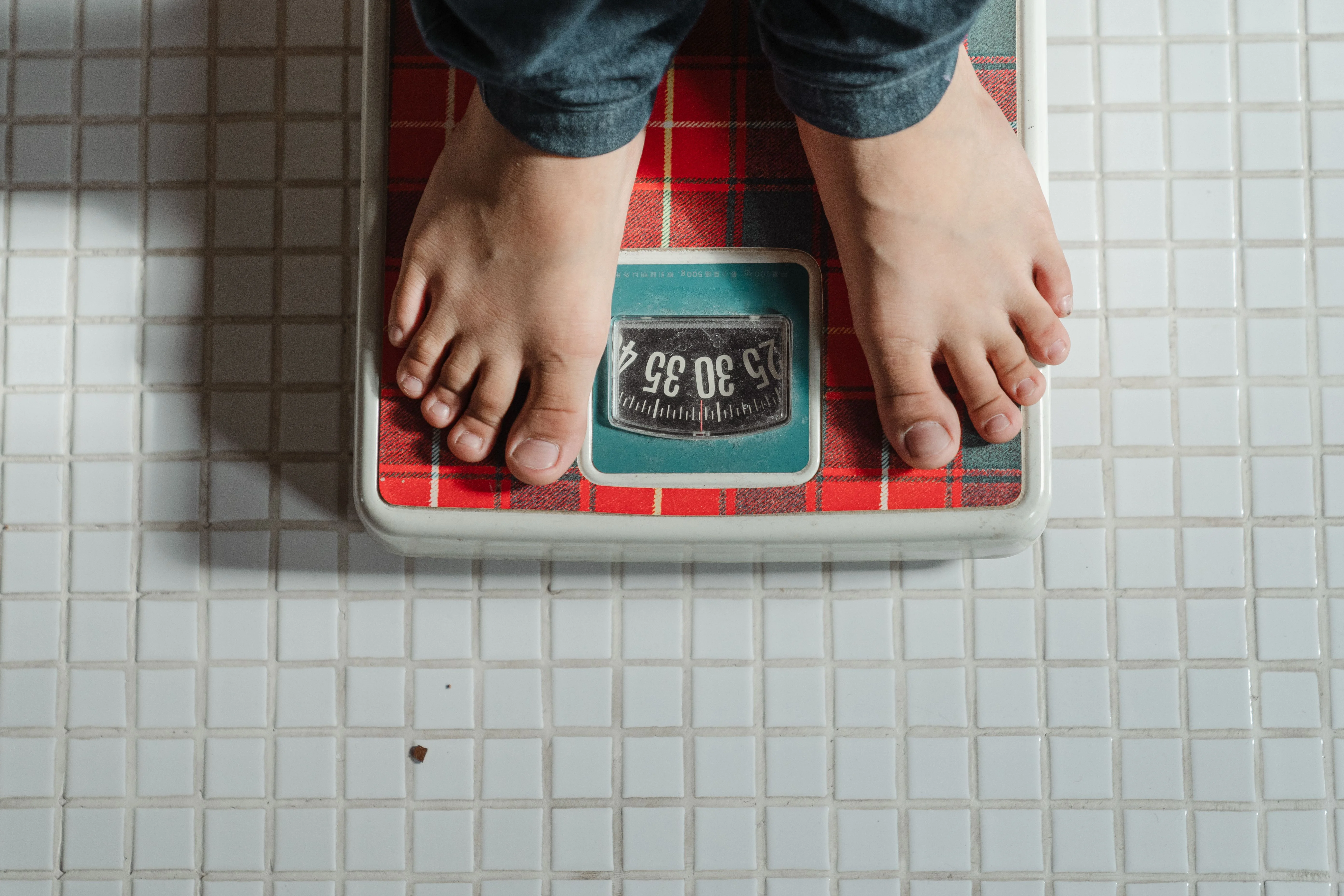
Weight loss is fundamentally about creating a calorie deficit. One kilogram of body fat equals approximately 7,700 calories. To lose 1 kg per week, you would need a daily deficit of 1,100 calories, which is aggressive and difficult to sustain. A more realistic goal is 0.5 kg per week with a 500-calorie daily deficit, or 0.25 kg per week with a 250-calorie deficit. The key is consistency — a moderate deficit you can maintain for months is far more effective than an extreme deficit you abandon after two weeks. Remember that as you lose weight, your BMR decreases, so you may need to recalculate your target every 4-6 weeks to keep the deficit working.
7. Calories for Weight Gain
Weight gain requires a calorie surplus. Eating 300-500 calories above your TDEE produces about 0.25-0.5 kg of weight gain per week. For lean muscle gain, combine the surplus with strength training and eat 1.6-2.2 grams of protein per kilogram of body weight. Avoid "dirty bulking" with junk food — this leads to fat gain rather than muscle. Instead, focus on nutrient-dense foods like lean meats, whole grains, healthy fats, and vegetables. Track your weight weekly and adjust your intake if the scale doesn't move.
8. Calories While Breastfeeding
Breastfeeding mothers need an additional 300-500 calories per day to support milk production. This means a breastfeeding woman's TDEE is her calculated TDEE plus 400 calories on average. Attempting aggressive weight loss while breastfeeding is not recommended, as it can reduce milk supply and deplete essential nutrients. A moderate deficit of 200-300 calories is generally safe for most mothers, but always consult your doctor or a lactation consultant before starting any weight loss plan. Focus on nutrient-dense foods to ensure your baby gets the vitamins and minerals they need.
9. How to Track Your Calories
Tracking your calories is essential for success, but it doesn't have to be complicated. Start by using a food scale to weigh your portions for the first few weeks — this trains your eye to recognize accurate serving sizes. Use a food tracking app to log what you eat and see how many calories you've consumed. Read nutrition labels carefully, paying attention to serving sizes and the number of servings per container. Meal prep once or twice a week to control portions and reduce impulsive eating. Finally, review your progress every week and adjust your target if the scale isn't moving in the right direction.
10. Free Calorie Calculator
Manual calculation mushkil lag rahi hai? Humne ek free Calorie Calculator banaya hai jo tumhare gender, age, height, weight, activity level, aur goal ke hisaab se automatically BMR, TDEE, target calories, aur macro split calculate karta hai. Isme breastfeeding support bhi hai aur ek treadmill calorie burn calculator bhi diya gaya hai.
🔥 Apna Daily Calorie Target Instantly Calculate Karo
Try Free Calorie Calculator →11. Frequently Asked Questions
How do I calculate my calories per day?
Calculate BMR using Mifflin-St Jeor, then multiply by activity factor (1.2-1.9) to get TDEE. For weight loss, subtract 500 calories from TDEE.
How many calories for 1 kg?
1 kg of body fat equals approximately 7,700 calories. A 500-calorie daily deficit produces about 0.5 kg loss per week.
Is 1200 calories a lot to eat in a day?
1200 calories is the minimum safe intake for women and generally considered low. For men and active women, it's too low and may cause muscle loss.
What is a good calorie per day?
Average women need 1,800-2,200 calories; men need 2,200-3,000. For weight loss, aim for 300-500 below TDEE.
How many calories do I burn a day?
Daily calorie burn equals your TDEE—typically 1,800-2,500 for women and 2,200-3,000 for men.
How many calories does a 70 kg person need?
A 70 kg person needs approximately 1,600-1,800 calories at rest and 2,000-2,800 calories per day depending on activity level.
How is 1 calorie calculated?
1 calorie is the energy to raise 1 gram of water by 1°C. In nutrition, we use kilocalories (kcal). Protein = 4 cal/g, Carbs = 4 cal/g, Fat = 9 cal/g.
Is 1500 calories enough for a day?
1500 calories is adequate for weight loss in many women but may be too low for men and very active people. Consult a doctor before very low-calorie diets.
Final Thoughts
Calculating calories accurately is the foundation of any successful weight loss or weight gain plan. Use the formulas in this guide to determine your BMR, TDEE, and personalized target, and adjust as your body changes. Pair your calorie target with a balanced macro split, regular exercise, adequate sleep, and stress management for the best results. And don't forget — consistency beats perfection every time.